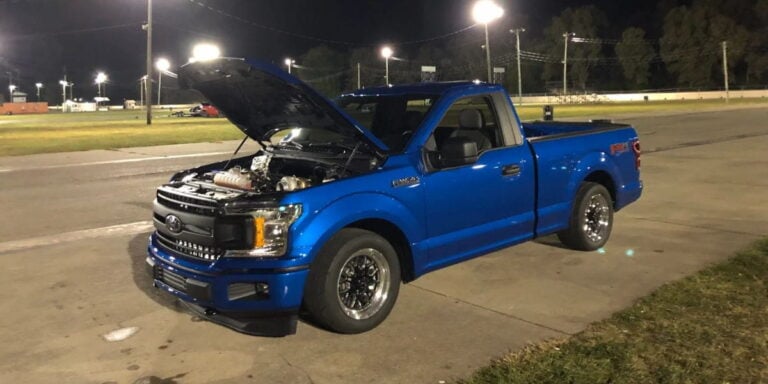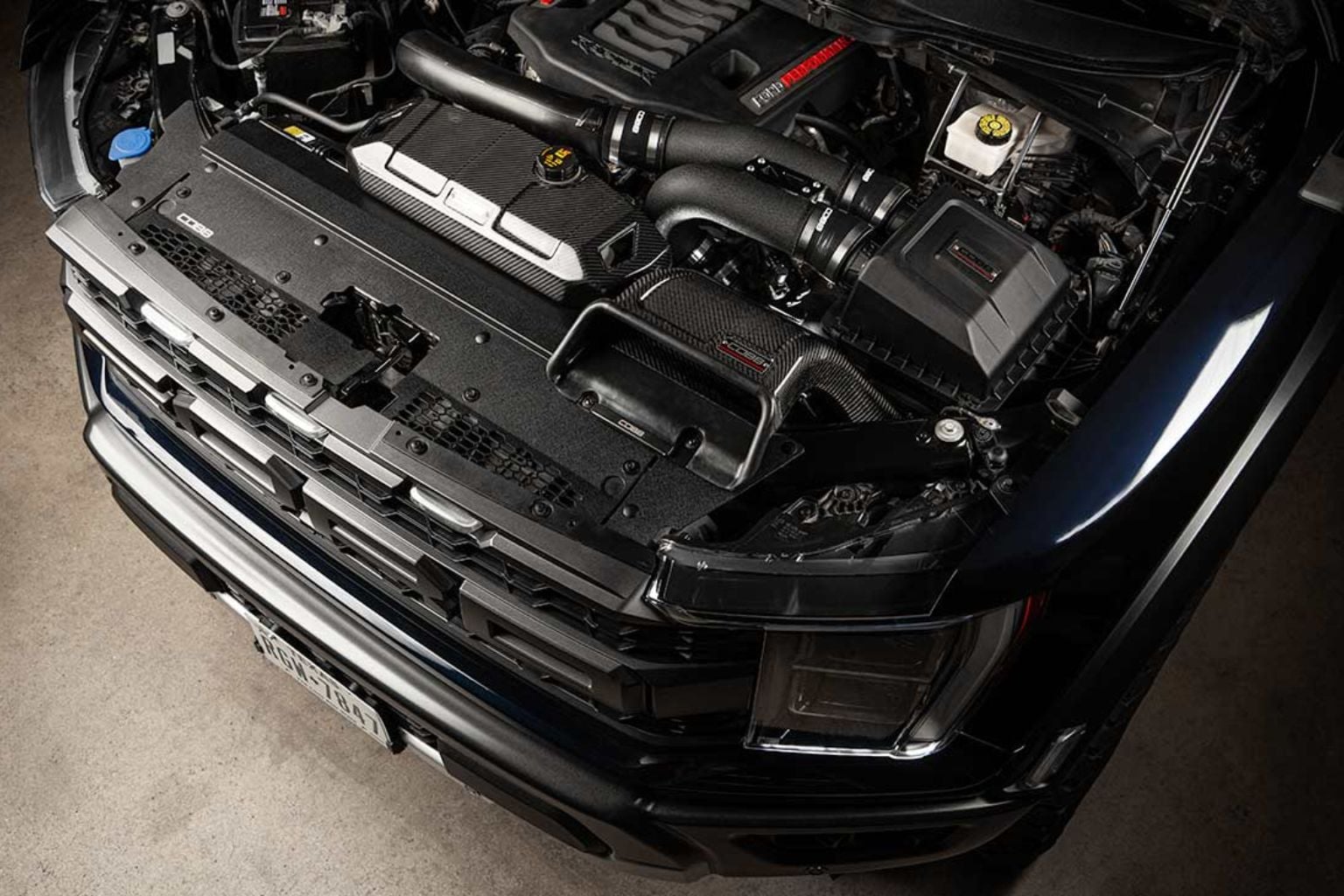
F150 EcoBoost Tune: What a 2015-2016 3.5L Custom Calibration Actually Changes
Ford rated the second generation 3.5L EcoBoost at 365 horsepower and 420 lb-ft of torque at the crank. On a chassis dyno, most stock 2015-2016 F-150s land around 300 to 315 wheel horsepower, which is a normal drivetrain gap and not a sign anything is wrong with your truck. That gap between the factory spec sheet and what actually reaches the pavement is exactly where an f150 ecoboost tune earns its money.
If you are 9 or 10 years into ownership of one of these trucks and wondering whether tuning is genuinely worth the cost, this article answers that directly. No broad claims about transforming your drive. Just honest numbers, real trade offs, and a clear picture of what changes after a dyno developed custom calibration on the Gen 2 3.5 EcoBoost platform.
Key Takeaways
- A custom f150 ecoboost tune on a stock 2015-2016 3.5 EcoBoost typically adds 30 to 50 wheel horsepower and 40 to 60 lb-ft of torque at the wheels, with gains concentrated in the mid range where you feel them most during everyday driving
- Fuel economy on pump 93 octane can improve by 1 to 3 MPG on the highway when driving conservatively, because the recalibrated ignition timing and fuel trims reduce the engine’s tendency to pull timing under light load
- The Gen 2 3.5 EcoBoost (2015-2016) has a distinct ECU architecture from the 2017-plus Gen 3, so tune files written for one platform do not transfer cleanly to the other
- Off the shelf tunes target a statistical average truck, a custom tune is written for your specific vehicle, its mileage, its fuel, and whatever bolt ons you have already installed
- You do not need bolt ons before tuning, a stock truck is a perfectly valid starting point, but adding a cold air intake or aftermarket exhaust before the tune session lets the calibrator extract noticeably more from the same hardware
How the 3.5L EcoBoost ECU Controls Power
Ford engineers do not write a single calibration for a single customer. They write one file that has to survive a global fleet, trucks sold in extreme heat, trucks running 87 octane, trucks towing maximum payloads in the Rockies, trucks owned by people who never change their oil on schedule. Every one of those scenarios pushes the factory calibration toward conservatism. Ford’s published rating of 365 horsepower and 420 lb-ft for the 2015-2016 3.5L EcoBoost, confirmed in the factory specifications for the 2016 F-150 EcoBoost, is a crank rating measured under controlled test conditions, not a number that reflects what your specific truck is doing on a specific afternoon.
The result is a boost target, an ignition timing map, and a fuel delivery strategy that all leave margin. On 93 octane pump fuel in a truck with normal miles and a clean air filter, the ECU is protecting against conditions that simply do not apply to your truck. A custom calibration removes that generic buffer and replaces it with parameters matched to your actual conditions.
Specifically, the Gen 2 3.5 EcoBoost ECU controls boost pressure through the wastegate duty cycle, ignition timing advance per cylinder, fueling via closed loop and open loop lambda targets, variable cam timing phasing on both intake and exhaust cams, and transmission shift points and torque management in the 6R80 automatic. A comprehensive f150 ecoboost tune touches all of these tables, not just boost. That is what separates a real tune from someone sliding a boost slider to the right in a generic handheld device.
Real Power and Torque Gains From an F150 EcoBoost Tune
On a stock 2015-2016 F-150 3.5 EcoBoost running 93 octane, a well executed f150 ecoboost tune typically produces 30 to 50 wheel horsepower and 40 to 60 lb-ft of wheel torque over the baseline pull. Those numbers are repeatable across multiple dyno pulls and consistent with what we see on our in house chassis dyno in Florence, SC.
If a 30 to 50 wheel horsepower gain sounds modest against Ford’s 365 crank rating, it helps to understand why wheel horsepower and crank horsepower are not the same measurement to begin with. Our own breakdown of brake horsepower versus wheel horsepower walks through why a 4WD F-150 loses roughly 18 to 22 percent of its crank rating through the drivetrain before it ever reaches the dyno rollers, and why WHP, not a crank number, is the only honest way to measure what a tune actually did.
The gains are not evenly distributed across the RPM range. Most of the torque increase arrives between 2,000 and 3,500 RPM, right where you feel acceleration during normal driving, merging onto a highway, or pulling a trailer up a grade. That mid range improvement is what makes a tuned 3.5 EcoBoost feel so different on a test drive compared to what a simple peak power number would suggest.
Pair the tune with a quality cold air intake and you are typically looking at another 10 to 20 wheel horsepower on top of that, because the calibrator can now optimize the MAF transfer function and airflow targets for the actual intake the engine is breathing through. You can browse the full tune and parts packages for the 2015-2016 F-150 3.5L EcoBoost to see what combinations are available for your exact build.
One honest caveat: the 2015-2016 Gen 2 platform responds well to calibration changes on the stock turbochargers and stock intercooler, but that hardware does have limits. If you want to exceed roughly 450 wheel horsepower reliably, you are eventually talking about upgraded turbos and a larger intercooler. An f150 ecoboost tune on stock hardware gets you to a real and usable power level, it is not a substitute for hardware when hardware is the actual ceiling.
Fuel Economy After a Tune: Will Your MPG Go Up, Down, or Stay the Same?
Fuel economy after a custom tune depends almost entirely on how you drive, but the honest answer for most owners is that highway MPG improves, city MPG stays roughly even, and combined MPG comes out slightly ahead if your right foot stays reasonable.
The reason highway economy improves on 93 octane is not magic. The factory calibration pulls ignition timing on light load cruise conditions partly because it cannot guarantee fuel quality across every truck it is installed in. On confirmed 93 octane with a properly mapped ignition advance table, the engine reaches its target combustion efficiency with less fuel per cycle. The EPA’s own description of how vehicle fuel economy is tested is a useful reference point here, since it shows how sensitive real world fuel economy results are to the exact conditions a vehicle is run under, which is the same reason a calibration matched to your truck’s real fuel and real driving conditions can outperform a generic factory map built to cover every scenario at once.
City economy is more neutral because the improvement in efficiency is partially offset by the improved throttle response making the truck easier to push harder from stoplights. That is human nature, not a tuning problem.
The 3.5 EcoBoost found in some Expedition applications uses closely related Gen 2 architecture and shows a similar economy response to calibration changes. If you own one of those platforms, our 2018-2019 Expedition 3.5L EcoBoost page covers the specifics for that application.
Drivability Changes You’ll Feel Right Away
For most owners, the drivability improvements are more noticeable on a daily drive than the peak power numbers. Three changes stand out immediately: throttle response, shift behavior, and boost delivery.
Throttle response. The factory drive by wire calibration includes a deliberate input delay intended to smooth out tip in feel for the broadest range of drivers. Most F-150 owners who have driven a tuned truck describe the stock throttle map as soft and slightly delayed off idle, almost like there is a half second of dead travel before the truck actually responds to your foot. A custom calibration remaps that pedal to engine torque relationship so the throttle tracks your input more directly, without making the pedal feel twitchy or hard to modulate in stop and go traffic. The goal is a throttle that does what you ask when you ask it, not a hair trigger.
Shift points and shift firmness. The 6R80 automatic behind the 3.5 EcoBoost is a capable transmission, but its factory shift schedule is tuned for smoothness and fuel economy first. A custom calibration can adjust shift points to keep the engine in the meat of its torque curve during acceleration, firm up shift pressure slightly so gear changes happen with more authority under load, and reduce the hunting between gears that some owners notice on rolling terrain or while towing. None of this requires a transmission rebuild, it is a software change to how the existing hardware is commanded.
Boost delivery. The factory wastegate duty cycle is calibrated conservatively to protect the turbos across every fuel grade and ambient condition Ford has to account for. On confirmed 93 octane, a custom tune can bring boost in earlier in the RPM range and hold a more consistent target, which is part of why the mid range torque gain feels so immediate rather than arriving in a sudden rush. The result is less of the slight turbo lag some owners notice on a bone stock truck and more of a linear build in power as you get into the throttle.
Is an F150 EcoBoost Tune Worth It on a 9 or 10 Year Old Truck?
This is the question most owners of a 2015 or 2016 F-150 are actually asking, and the honest answer depends on the condition of the truck more than its age. A 3.5 EcoBoost with normal maintenance, a healthy transmission, and no existing drivability complaints is a good tuning candidate at almost any mileage, since the calibration is working with the engine’s current state, not fighting against a known mechanical issue.
Where tuning is not the right first step is a truck with an unresolved check engine light, a transmission that already shifts roughly, or carbon buildup severe enough to cause a noticeable misfire or hesitation. A custom calibration can mask the symptom of an unrelated mechanical problem briefly, but it will not fix carbon on the intake valves or a failing coil pack, and chasing a drivability complaint with a tune before ruling out those issues usually ends up costing more in the long run. If your truck runs clean and healthy today, a tune is addition, not correction. If it does not, the mechanical issue comes first.
Frequently Asked Questions
Does an f150 ecoboost tune void the factory warranty?
If your 2015-2016 F-150 is still within its original Ford powertrain warranty, a tune can affect warranty coverage on tuning related components, and most owners in this situation wait until the warranty has expired or use a tuner that reflashes back to stock before a dealer visit. Since these trucks are now 9 to 10 years old, most are well past their factory powertrain coverage.
Do I need a cold air intake or exhaust before tuning?
No. A stock 2015-2016 F-150 3.5 EcoBoost is a perfectly valid starting point for a custom calibration. Bolt ons are not required, they simply give the calibrator more airflow and exhaust flow to work with, which can add a further 10 to 20 wheel horsepower on top of the tune alone.
Will a tune hurt my engine or transmission?
A properly developed custom calibration, tested on a chassis dyno and matched to your fuel and hardware, operates within safe limits for the stock turbochargers, intercooler, and 6R80 transmission. Problems generally come from off the shelf tunes pushed too aggressively for a given truck’s condition, not from calibration in general.
How long does a custom f150 ecoboost tune take?
Dyno development time varies by shop and how many revision pulls a calibration needs, but most custom tuning sessions are completed in a single visit, with before and after dyno numbers provided so you can see exactly what changed.
Get Your F150 EcoBoost Tune From 5 Star Tuning
5 Star Tuning has been family owned since 2004 and is an authorized HP Tuners and SCT dealer with a 4.7 star rating across more than 1,100 Google reviews. Every custom calibration we write for the 2015-2016 F-150 3.5L EcoBoost is developed and verified on our in house chassis dyno in Florence, SC, with a baseline pull before any changes and a final pull to confirm the real wheel horsepower and torque gain on your specific truck, not an estimate.
Browse our 2015-2016 F-150 3.5L EcoBoost tuners and custom tune packages to see available options for your build, or contact our team with questions about what a tune can realistically do for your specific truck before you buy anything.